

From social media buzz to one of our most popular treatments, here’s what you need to know about polynucleotides.
If you’ve spent any time on social media recently, chances are you’ve come across polynucleotides. They’ve been making quite a name for themselves in the aesthetics world, and it’s easy to see why.
At Face Clinic London, they’re fast becoming one of our most popular treatments. With more patients looking for ways to improve their skin without dramatically changing their appearance, polynucleotides offer a different approach to skin rejuvenation. One that’s less about adding volume and more about improving the quality of the skin itself.
So, what exactly are polynucleotides?
Polynucleotides are injectable skin treatments made from highly purified fragments of DNA. They work by supporting the skin’s natural repair processes and are used to help improve hydration, elasticity and overall skin quality.
Unlike dermal fillers, which are designed to restore or enhance volume, polynucleotides focus on the condition of the skin itself.
Think of them as a treatment for skin that needs a little extra attention. Whether that’s fine lines around the eyes, a loss of elasticity or skin that’s simply looking a little tired, the aim is to encourage gradual improvements rather than create an obvious change. It’s a subtle approach to aesthetics that we particularly love.
A little about the brand we use
Not all polynucleotide treatments are the same, which is why the product used matters.
At Face Clinic London, we use Croma PolyPhil™, a polynucleotides range developed using highly purified DNA fragments derived from freshwater trout. Yes, trout. But don’t let that put you off!
While you may have heard these treatments described online as ‘salmon DNA’, the reality is a little more scientific. PolyPhil undergoes a careful purification process that isolates the polynucleotides for treatment.
It’s an interesting example of how ingredients with rather unexpected origins can find their way into modern aesthetic medicine. As with any injectable treatment, suitability is important. Before treatment, our clinicians will assess your skin and medical history, including any allergies to fish-derived products.
Why is everyone talking about them?
Part of the appeal of polynucleotides is that they’re not designed to change the way you look. There’s been a noticeable shift in aesthetics towards treatments that focus on skin quality. Patients are increasingly interested in looking refreshed without necessarily adding volume or altering their features.
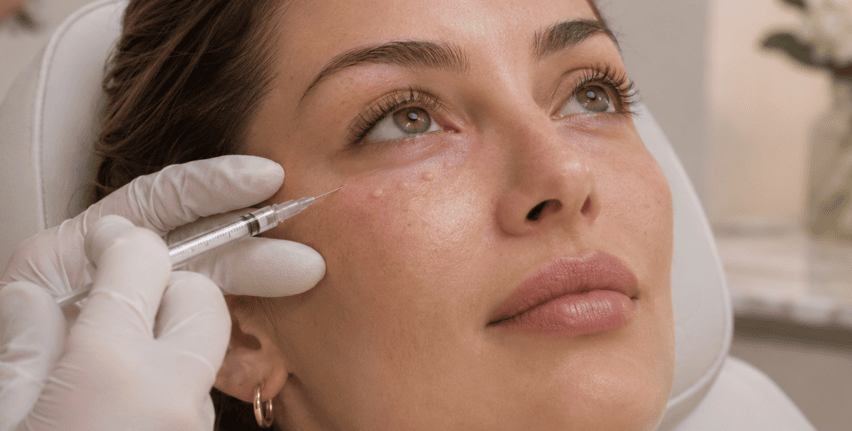
They’re particularly popular for the delicate under-eye area, where concerns such as crepey skin and fine lines can be difficult to address with traditional skincare alone. Clinicians can also use them across the face. to support improvements in texture, hydration and elasticity.
Results develop gradually, and we usually recommend a course of treatments.. As with all aesthetic treatments, individual results vary and the clinical evidence is still developing.
What should you expect from treatment?
Your clinician administers polynucleotides through a series of small injections. Immediately afterwards, you may notice tiny raised bumps at the injection sites. These are a normal part of the treatment process and usually settle.
You may also experience some redness, swelling or bruising, particularly around the eyes.
Unlike treatments that create an immediate visible change, polynucleotides are about giving the skin time to respond. Improvements tend to develop over the following weeks, with your clinician recommending a treatment plan based on your individual concerns.
A more considered approach to skin rejuvenation
One of the things we love most about polynucleotides is the philosophy behind them. Not every aesthetic treatment needs to be about changing something, sometimes it’s simply about helping your skin look and feel its best.
At Face Clinic London, our approach has always been to recommend treatments that suit the individual rather than follow every passing trend. And while polynucleotides might be having their moment on social media, it’s their potential for subtle skin rejuvenation that makes them such an interesting addition to our treatment offering.
Curious whether they could be right for you? Our clinicians would be happy to talk you through the options during a consultation.

- Polynucleotides: The Skin Treatment Everyone’s Talking About - November 18, 2026
- A New Chapter at Face Clinic London - November 11, 2026